In brief
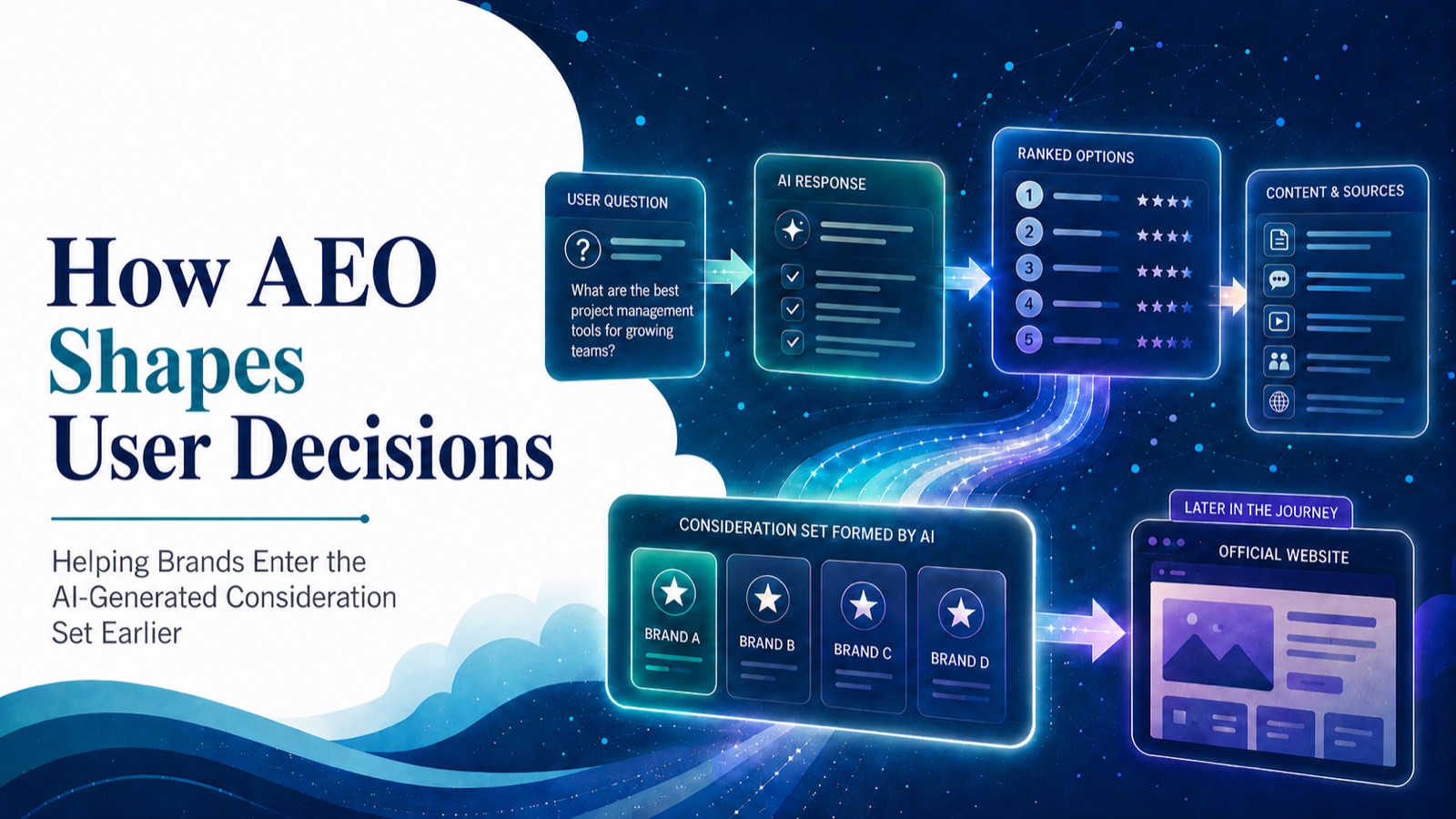
- People increasingly ask AI which option is right for them, and AI filters and compares the options before they visit a website.
- For brands, the question moves from ‘Can people find us in search?’ to ‘When someone asks AI for advice, will we make the shortlist?’
- Different AI systems draw on different sources, so a brand needs to know where each model gets its information before optimising.
- Jeffery Asia treats AEO as an additional layer that connects SEO, social media, content and performance marketing, not a replacement for them.
In a recent conversation with a leading Asian university, the Jeffery Asia team discussed a question that is becoming increasingly relevant for marketers: what happens when people stop simply searching for information and start asking AI what they should choose?
Students, consumers and business decision-makers are becoming more comfortable asking AI direct questions. And AI is doing more than helping them find information. It is increasingly helping them:
- filter options;
- compare alternatives;
- decide what is worth exploring further.
For brands, that changes the question. It is no longer only, ‘Can people find us in search?’ It is also, ‘When someone asks AI for advice, will we make the shortlist?’
This is one of the key reasons Jeffery Asia has been exploring Answer Engine Optimisation (AEO). Traditional digital marketing has focused heavily on search rankings, clicks and reach. In an AI-led search environment, we need to ask a different set of questions:
- Does AI understand the brand?
- Does it mention or cite the brand when the right questions are asked?
- How does it compare the brand with competing options?
- When a user asks, ‘Which one is right for me?’, is the brand part of the answer?
From Search to Questions: AI Is Starting to Shape What People Consider
Traditional search usually starts with a keyword. AI search feels much more like a conversation with an adviser.
| Traditional search | AI search | |
|---|---|---|
| How it starts | Someone types in a phrase | The user explains their background, what they are trying to achieve, what they are concerned about and what matters most to them |
| What comes back | A list of results the user works through to decide what is relevant | AI makes sense of the options for them |
| What optimisation centres on | The relationship between a keyword and a webpage | Who is asking, what situation they are in, what they are trying to achieve and how they are likely to phrase the question |
The same person may ask very different questions at different points in their journey. When the question changes, the answer — and the brands included in it — may change as well.
For us at Jeffery Asia, AEO is not simply about producing more content that is supposedly ‘AI-friendly’. It is about connecting four things, so that when AI is helping someone make a decision, the brand has a better chance of being understood correctly and included in the conversation:
- user intent;
- real questions;
- relevant sources;
- useful content.
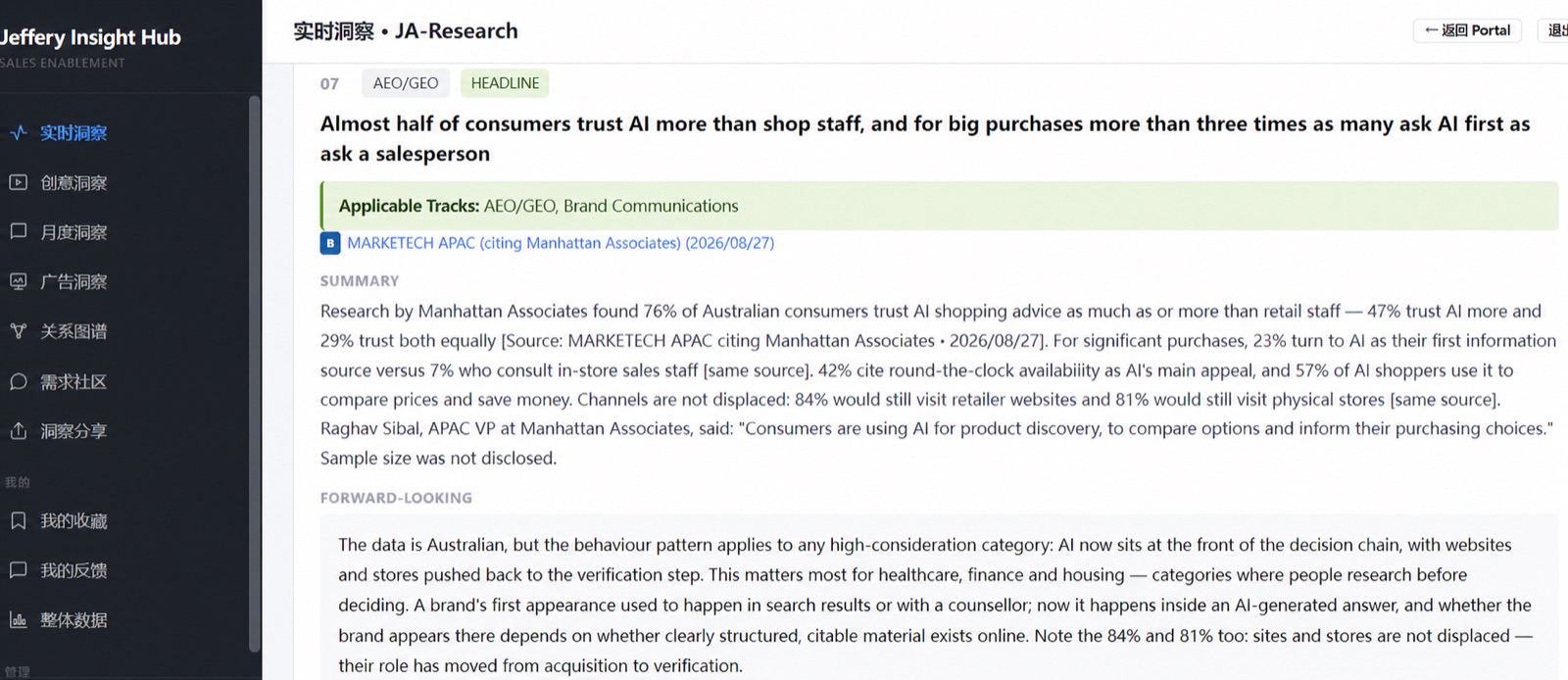
Where Does AI Get Its Answers From?
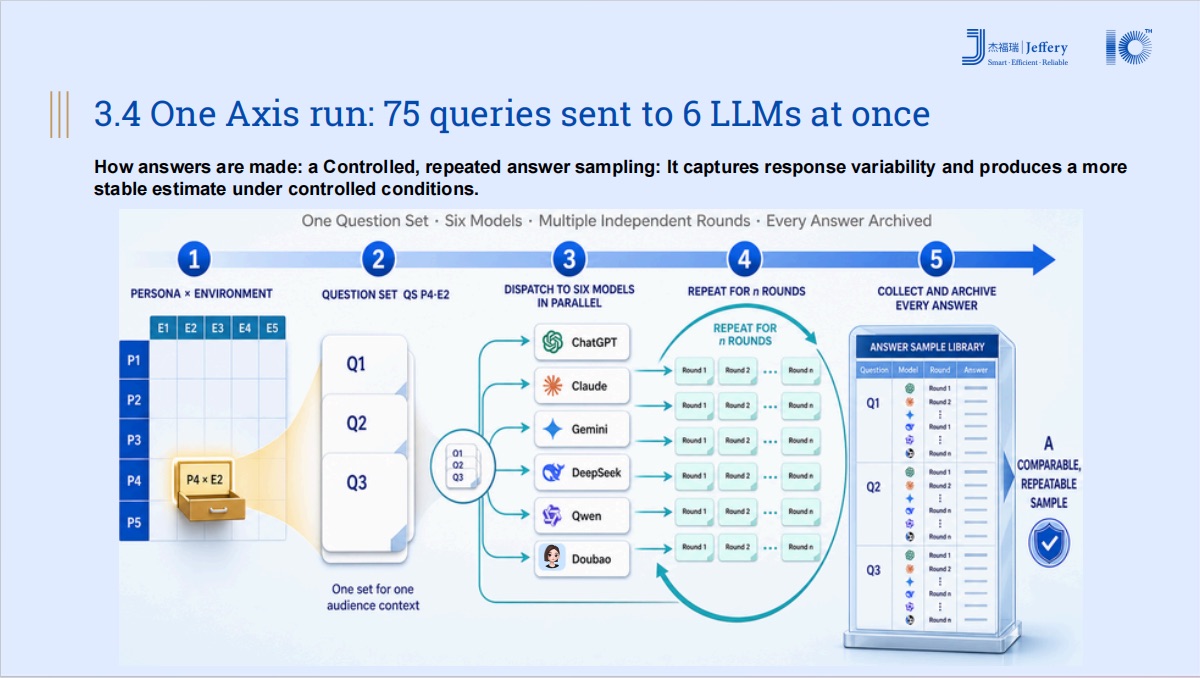
Seeing your brand mentioned once in an AI response may look encouraging, but one screenshot does not tell you very much. A more useful set of questions would be:
- Consistency: how consistently does the brand appear?
- Position: where does it sit compared with competing options?
- Attention: how much attention does AI give it in the answer?
- Sources: which sources is AI relying on to reach that answer?
This is why we are working to make AI visibility something that can be tracked and compared over time, rather than treated as a one-off observation. The aim is not to create a score simply for the sake of it. It is to answer two practical questions:
- Where do we currently stand in AI-generated answers?
- After improving the content and source mix, can we see a measurable change?
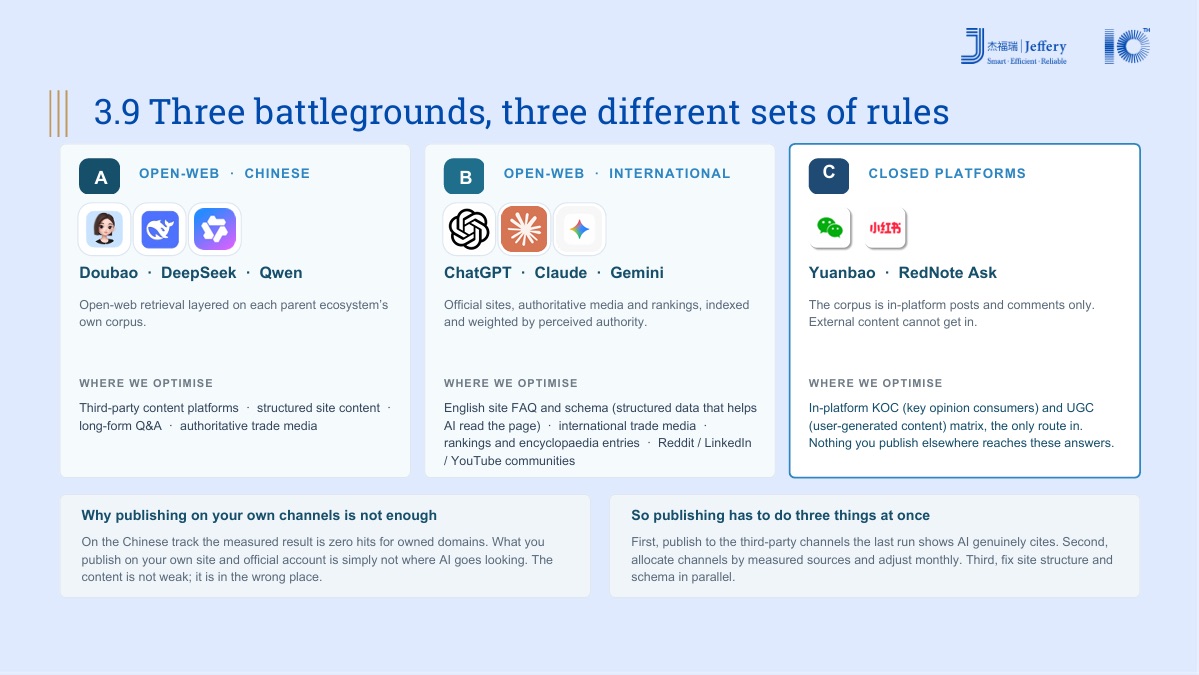
There is another important consideration: not every AI system sees the same internet. International AI models, Chinese-language models and more closed content ecosystems can draw on very different sources. What works well for one model may have little impact on another.
So before optimising for AEO, brands need to understand where the AI they care about is actually getting its information from. Only then can they make informed decisions about:
- what content to improve;
- which sources or platforms they need to build visibility on.
Your Shortlist May Be Taking Shape Before You Ever Visit a Website
This matters particularly in sectors where decisions take time — universities, professional services and other high-consideration categories. People are rarely looking for one simple factual answer. They are asking comparison and decision questions such as:
- ‘Which option is a better fit for me?’
- ‘How do these two options compare?’
- ‘Which one is more suitable for my long-term goals?’
When AI responds with a structured recommendation, it may already be influencing which brands or organisations the user chooses to explore further — before they visit an official website, make an enquiry or become a lead.
This is where AEO becomes especially interesting. The aim is not simply to gain another impression. It is to help the brand make the shortlist earlier, while the user is still working out what their options are — giving it more opportunities to be understood, compared and considered as the decision develops.
AEO Is Becoming a New Route into the Decision Journey
At Jeffery Asia, we do not see AEO as a replacement for SEO, social media, content marketing or performance marketing. We see it as an additional layer connecting them. It starts with understanding what users actually want to know. From there, we look at:
- how AI finds and organises information;
- which sources it relies on;
- what content is needed to help a brand appear more meaningfully in the answers that matter.
In practice, that means bringing together five elements: user intent, AI questions, source strategy, content and ongoing monitoring.
AI search is still evolving quickly, and no AEO methodology should be treated as a permanent formula. But one thing is becoming increasingly clear. Brands that understand earlier what their audiences are asking AI, what information AI is drawing on and whether they are appearing in those answers will be in a stronger position as search and decision-making continue to evolve.
In our next article, we look more closely at how AI visibility can be measured — and why being mentioned once is very different from genuinely becoming part of someone’s decision process.
To discuss what AEO and AI visibility could look like for your brand or institution, contact success@jeffery.asia or visit jeffery.asia.