Key facts
- What
- Xiaowei, a new AI assistant inside the Chinese version of WeChat
- Testing began
- 22 June 2026
- Input
- Voice and text
- Model
- Primarily Tencent’s WeLM foundation model, with DeepSeek as a fallback for selected queries
- Reported by
- Bloomberg and CNBC
Over the past three years, the cross-border consumer journey in China has followed a familiar pattern inside WeChat:
- a prospect discovers a brand through Official Account articles or WeChat Channel (Video) Accounts;
- a Mini Program captures the lead;
- WeCom moves the conversation into one-to-one consultation.
The path is mature, repeatable, and widely understood. But that journey is beginning to change.
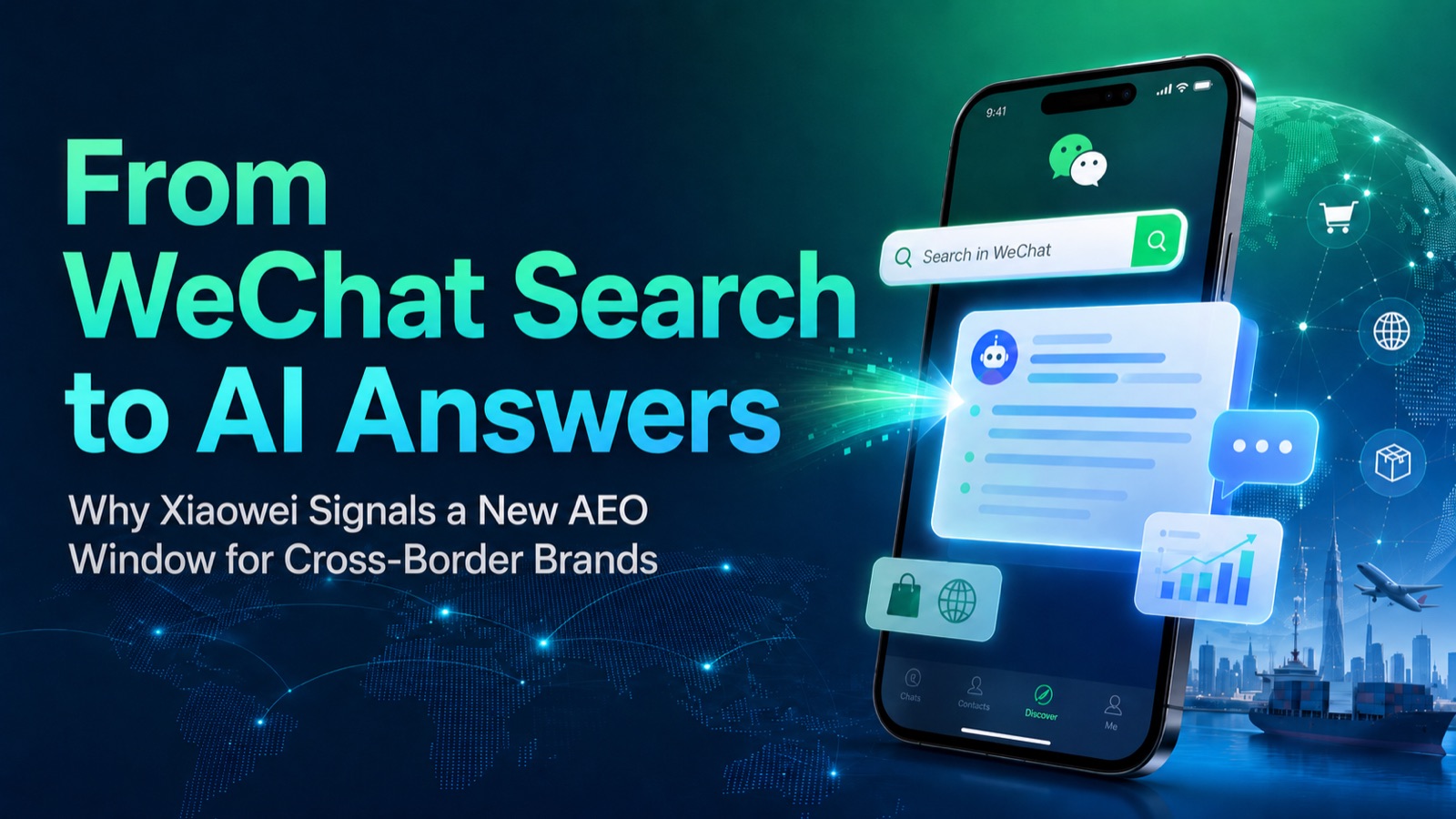
On 22 June, Tencent quietly began testing Xiaowei, a new AI assistant inside the Chinese version of WeChat. For cross-border brands operating in China, the significance of Xiaowei is not that every brand now needs to optimise for one specific assistant. Rather, it signals a broader shift: the user decision journey is moving from search, browsing, and content discovery toward AI-mediated answers.
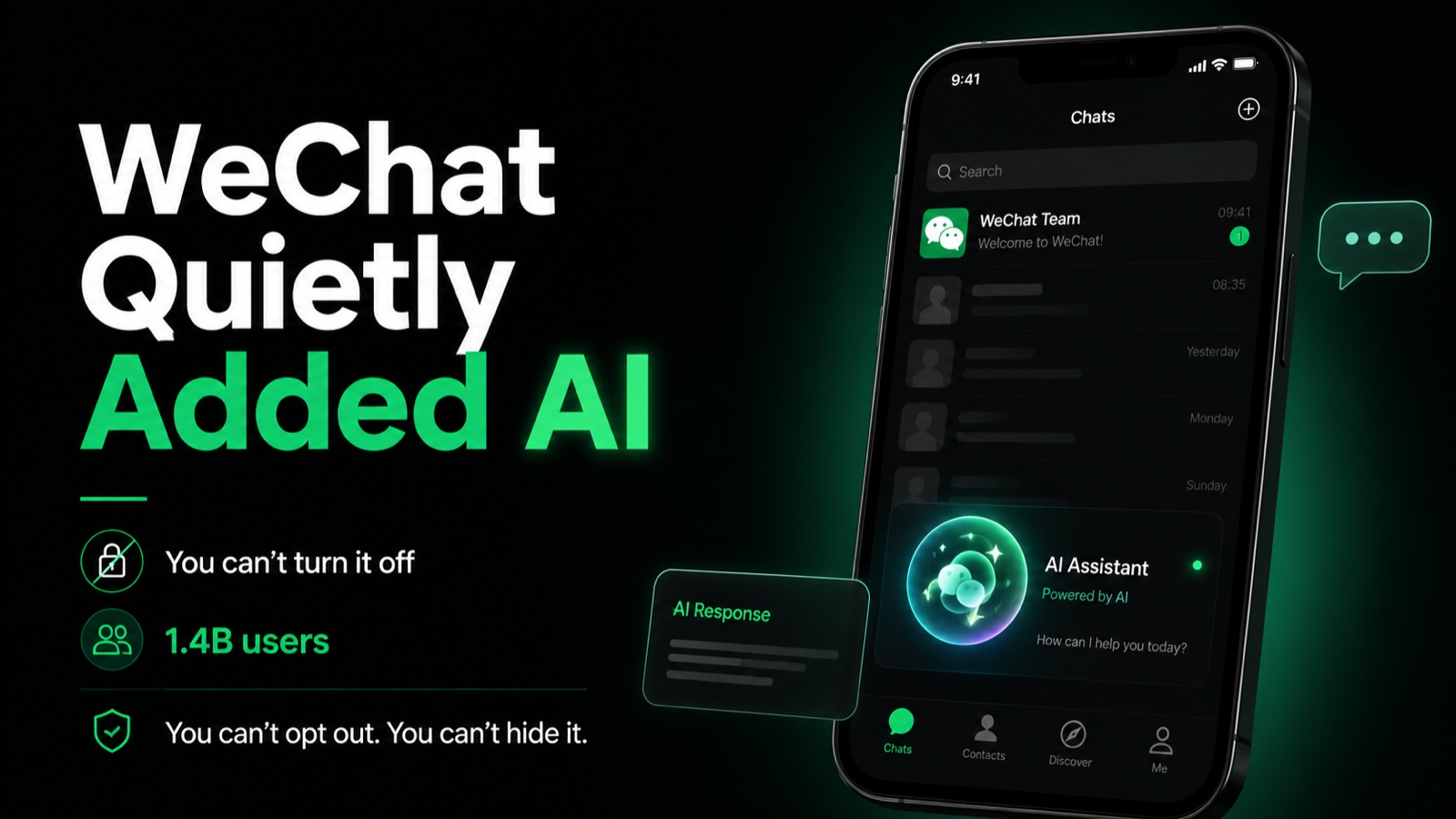
This matters because the next competitive layer will not only be whether a brand can be found inside WeChat, but whether it can be understood, cited, and recommended when users ask AI systems decision-making questions. As this shift accelerates, AEO, or Answer Engine Optimisation, becomes increasingly important for brands that want to stay visible before the user reaches a form, a Mini Program, or a WeCom consultation.
Tencent Moves the AI Entry Point Inside WeChat
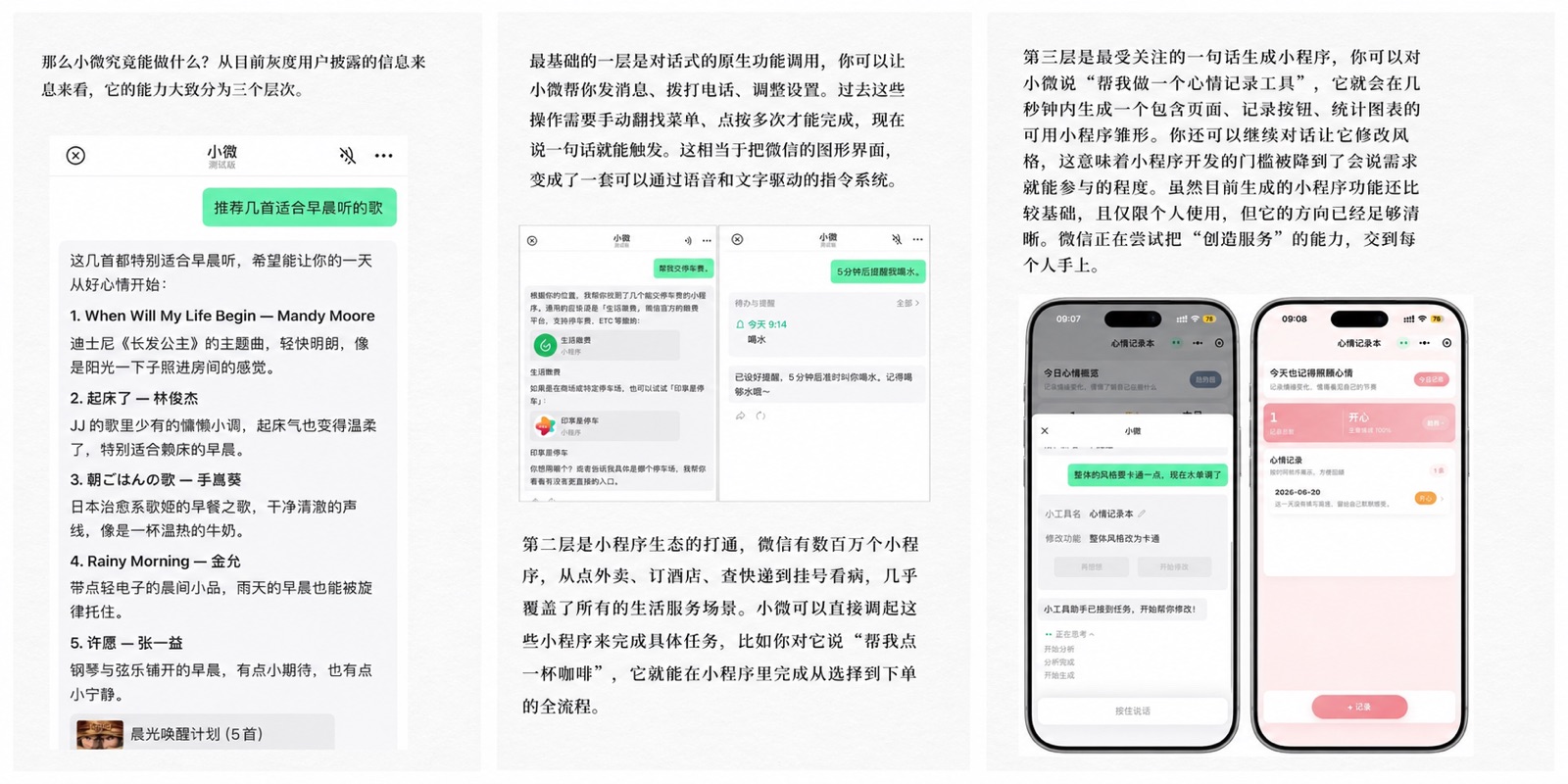
According to Bloomberg and CNBC, Xiaowei:
- is already accepting both voice and text input from users inside the Chinese version of WeChat;
- can invoke services across Tencent’s own ecosystem;
- is being introduced through entry points embedded within the existing WeChat interface, rather than appearing as a standalone destination;
- is primarily powered by Tencent’s WeLM foundation model, with DeepSeek used as a fallback for selected queries.
This launch is not an isolated move:
| When | What happened |
|---|---|
| Late March | WeCom open-sourced a CLI covering seven core capabilities — messaging, scheduling, documents, intelligent sheets, meetings, tasks, and contacts — with explicit support for AI Agent integration. |
| April | The WeChat developer platform further opened its AI ecosystem to Mini Program developers. |
| 22 June | Tencent began testing Xiaowei inside the Chinese version of WeChat. |
Together, these steps point to the same direction: the AI entry point for WeChat’s massive user base is moving into WeChat itself.
Chinese users may not need to download a separate ChatGPT-style application to use AI in daily decision-making. Instead, the AI assistant they consult is likely to develop inside the same ecosystem where they already discover brands, ask questions, compare options, and take action.
What This Shift Means for Cross-Border Brands
Xiaowei does not mean brands need to rebuild their WeChat presence overnight. It signals a broader change: private-domain assets are no longer only traffic and conversion tools. These are becoming part of the answer environment that AI systems may use to understand and recommend brands:
- Official Account articles
- Mini Programs
- FAQs
- website pages
- media coverage
- WeCom workflows
| The question used to be | The question is becoming |
|---|---|
| “Can users find us?” | “Can AI systems understand why we are relevant when users ask decision-making questions?” |
This is especially important in education, healthcare, finance, and B2B services, where users compare options, ask repeated questions, and increasingly rely on AI tools before taking action.
Jeffery Asia’s View
This is where Jeffery Asia’s AEO service becomes relevant. AEO helps brands improve visibility, relevance, and recommendation probability within large language models and AI question-answering scenarios. It is not about optimising for Xiaowei as a single assistant, but about making brand content easier for AI systems to find, understand, cite, and recommend.
Through audience tags, personas, scenarios, query mapping, content optimisation, and performance reporting, Jeffery Asia helps turn scattered brand assets into a more structured answer-ready system. The rise of Xiaowei should therefore be read as an early signal of a larger shift: brands now need to compete not only for traffic, but also for visibility inside AI-generated answers.
If your team operates a website, WeChat Official Account, RedNote, media coverage, or other digital brand assets today, the question is no longer only whether users can find you through search or social platforms. It is whether your brand can also be found, understood, cited, and recommended across AI answer environments such as ChatGPT, DeepSeek, Doubao, Qwen, and more.
Jeffery Asia’s AEO service helps brands move from fragmented visibility to answer-ready growth through:
- AI visibility diagnosis
- audience tag modelling
- persona and scenario mapping
- query simulation
- content and FAQ optimisation
- citation tracking
- competitor benchmarking
- ongoing performance reporting
To discuss what AEO could look like for your programme or organisation, contact success@jeffery.asia or visit jeffery.asia.